CBT-I vs Sleeping Pills
- May 19, 2026
- By: Sleepstationuk.com
-
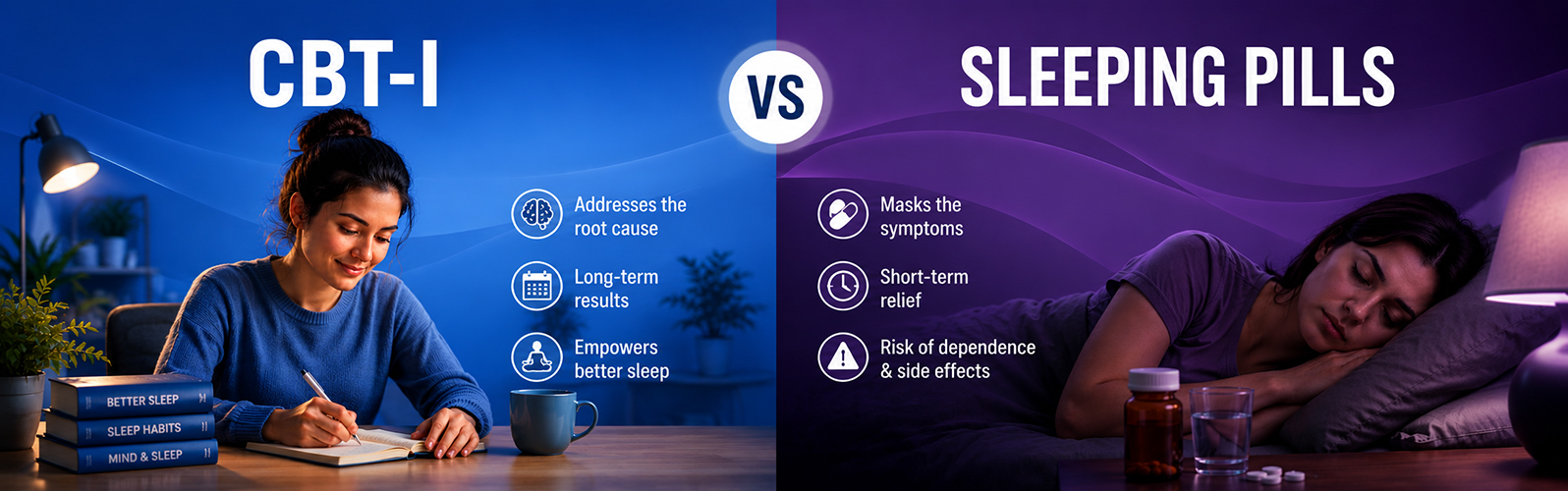
Even though sleep is very important for health, millions of people have trouble sleeping or other sleep problems. Cognitive Behavioral Therapy for Insomnia (CBT-I) and sleeping pills are two popular ways to help people who are having trouble sleeping. Both methods are meant to help you sleep better, but they do so in very different ways and have different pros and cons.
To make an educated choice, you need to know the differences between CBT-I and sleeping pills. This blog post goes into detail about both choices and compares how well they work, how safe they are, how they will affect people in the long term, and how well they fit different people.
What Does Cbt-I Mean?
Cognitive Behavioral Therapy for sleeplessness, or CBT-I, is an organized, research-based treatment for sleeplessness that aims to get to the bottom of the problem. Instead of using drugs, CBT-I works on changing the ways that people think, act, and do things that make it hard to sleep.
CBT-I is usually done with the help of a trained therapist, but there are also internet and self-help tools that can be used. The goal is to teach the body and mind new ways to sleep that are better for them.
Important Parts of CBT-I Restructuring Thoughts
This means recognizing and fighting bad thoughts about sleep. A lot of people who have trouble sleeping get anxious before bed, which makes the problem worse. CBT-I helps people change these negative thoughts into more positive and realistic ones.
Limits on Sleep
Sleep restriction means that you can only stay in bed for as long as you need to sleep. It might not make sense, but this helps build sleep pressure and makes sleep better over time.
Stopping the Stimulus
This method makes the link between the bed and sleep stronger. It has rules like only going to bed when you're tired and not doing things like watching TV in bed.
Methods for Relaxation
Methods such as deep breathing, meditation, and progressive muscle relaxation help reduce physical and mental tension before bedtime.
Teaching Good Sleep Habits
CBT-I also stresses good sleep habits, such as sticking to a regular routine, limited coffee, and making your bedroom a comfortable place to sleep.
Where Can I Find Sleeping Pills?
Sleeping pills are medicines that are meant to help people fall asleep or stay asleep. While most people only need them for a short time, you can buy some of them without a prescription.
Most of the time, these drugs make you sleepy by changing chemicals that are involved in the sleep-wake cycle.
- Different Kinds of Sleep Aids
- Prescription Medications
- Sedatives and hypnotics
- Benzodiazepines
These are generally given by a doctor to people who have mild to serious sleeplessness.
- Sleep aids you can buy over the counter
- Pain killers
- Supplements with melatonin
Most people can get these, but they may still have side effects.
CBT-I vs. Sleeping Pills: How They Work
Getting To The Root Causes Vs. Just Relieving Symptoms
The main goal of CBT-I is to find and fix the root reasons of insomnia, like worry, anxiety, or bad sleep habits. Medications that make you sleepy, on the other hand, only help for a short time because they don't treat the cause of the problem.
Long-Term vs. Short-Term Plans
CBT-I is meant to help people for a long time. Once you know how to do something, you can always do it. But sleeping drugs should only be used for a short time because they can make you dependent on them and stop working as well over time.
How Well CBT-I Works
Research has shown over and over that CBT-I is a very good way to help severe sleeplessness. A lot of people notice big changes in the quality, length, and general health of their sleep. Some benefits are:
- Less time to get to sleep
- Less waking up at night
- Better sleep efficiency
- Results that last
The benefits of CBT-I often last after the session is over, unlike drugs.
How Well Sleeping Pills Work
Insomnia that is caused by short-term worry or changes in your life can be helped by sleeping pills for a short time.
Some benefits are:
- Getting to sleep faster
- Getting up less at night
- Right away relief
But they might not work as well after a while of use, and they don't fix the real problems.
Health Risks and Side Effects
In general, CBT-I is safe and doesn't have any negative effects on the body. But it might take work, discipline, and patience.
Some possible problems are:
- Initial pain from not being able to sleep
- Commitment of time
- Need for skilled help
- Drugs for sleep
A number of bad things can happen when you take sleeping pills, such as:
- Getting sleepy during the day
- Feeling sick
- Problems with memory
- Dependence and signs of withdrawal
Tolerance may also rise with long-term use, which means that bigger amounts are needed to get the same effect.
Dependence and Getting into Habits
One big worry about sleeping pills is that they can make you dependent on them. Over time, the body may become dependent on the drug to fall asleep, making it hard to fall asleep on its own.
This is different from CBT-I, which encourages freedom. It gives people the tools they need to control their sleep without outside help.
- Comparison of Costs
- CBT-I
- More money up front
- May need more than one session
- Long-term cost-effective because the rewards last a long time
- Drugs for sleep
- Less expensive at first
- ongoing cost for continued use
- Possible extra costs because of side effects or dependence
- Ability to access
Some places might not have easy access to CBT-I, and it can be hard to find trained therapists. It is easier to get to now, though, thanks to online classes and apps. Sleeping pills are easy for many people to get, which makes them a good choice.
Who Should Pick CBT-I?
This is what CBT-I is great for:
- People who have constant sleepiness
- People who want long-term answers
- People who would rather not take medicine
- People who are worried about side effects
Who Could Benefit from Night Pills?
Pills that help you sleep might be good for:
- Short-term sleep problems
- Sleep disturbances for a short time
- Situations that need help right away
- People who are under medical care
- Putting together CBT-I and sleeping pills
Sometimes, it may be best to use both CBT-I and short-term medicine together. This method can give you quick relief while treatment works on the deeper problems. But this should only ever be done with the help of a professional.
Changes In Lifestyle That Work For Both Approaches
No matter what way you choose, making these changes to your living can help you sleep better:
- Keeping the same sleep plan every night
- Cutting down on screen time before bed
- Not having coffee or big meals at night
- Setting up a comfortable place to sleep
- Regularly doing hard things
Typical False Ideas
- It takes too long for CBT-I to work. CBT-I may take a few weeks, but the long-term effects often make up for the time it takes at first.
- Pills that help you sleep are a permanent fix. It's not recommended to take sleeping pills for a long time, and they might not work as well after a while.
- It is always safe to use natural remedies.
- Even over-the-counter sleep aids should be used with care because they can have side effects.
A Scientific Point of View
In the long run, studies have shown that CBT-I works just as well as or better than sleeping pills. Many sleep experts say it should be the first thing you try if you have severe sleeplessness. Sleeping pills are still useful for short-term use, but they are not seen as a complete answer.
How to Begin with CBT-I: Some Tips
- Talk to a licensed therapist.
- Stick to the methods you use.
- Record how you sleep.
- Be patient while you make the first changes.
- How to Use Sleeping Pills Safely
- Don't use anything else.
- Don't drink booze while taking medicine.
- Not more than the minimum doses
- Talk to a healthcare provider about your worries.
Effects on Health in the Long Run
- Helps mental health
- Lessens worry and stress
- Encourages long-term sleep habits
- Drugs for sleep
- It could make you dependent
- Possible effect on brain function
- Chance of long-term health problems
Conclusion
Both CBT-I and sleeping pills can help with sleeplessness, but they do so in different ways. CBT-I focuses on long-term improvement by getting to the root causes of sleep problems. Sleeping pills, on the other hand, only help for a short time.
Most of the time, CBT-I is the better option for people who want a long-term answer. But sleeping pills can be useful in some cases if they are used properly and under the care of a doctor.
In the end, the best way to deal with insomnia relies on the person's wants, how bad their insomnia is, and their own personal tastes. Better sleep and a higher quality of life can be achieved with a well-rounded plan that includes healthy sleep habits, professional help, and smart choices.

Dr. Priyanka Goel
Speciality: Medical Content Reviewer
Disclaimer:
This content is for informational purposes only and does not constitute medical advice. Always consult a qualified healthcare professional before starting any treatment. Do not ignore professional medical advice based on information from this website.
Medical References:
- MedlinePlus. (2022, March 29). Insomnia. https://medlineplus.gov/insomnia.html
- MedlinePlus Medical Encyclopedia. (2022, April 1). Insomnia. https://medlineplus.gov/ency/article/000805.htm
- Mayo Clinic. (2019, October 16). Sleep Aids: Understand Over-the-Counter Options. https://www.mayoclinic.org/healthy-lifestyle/adult-health/in-depth/sleep-aids/art-20047860
- Mayo Clinic. (2018, January 30). Prescription Sleeping Pills: What’s Right for You? https://www.mayoclinic.org/diseases-conditions/insomnia/in-depth/sleeping-pills/art-20043959
- Mayo Clinic. (2016, September 28). Insomnia Treatment: Cognitive Behavioral Therapy Instead of Sleeping Pills. https://www.mayoclinic.org/diseases-conditions/insomnia/in-depth/insomnia-treatment/art-20046677